


Sapa
Tickets and tours
Not Found
Please try again later.
Sapa, A Hidden Gem in the Highlands
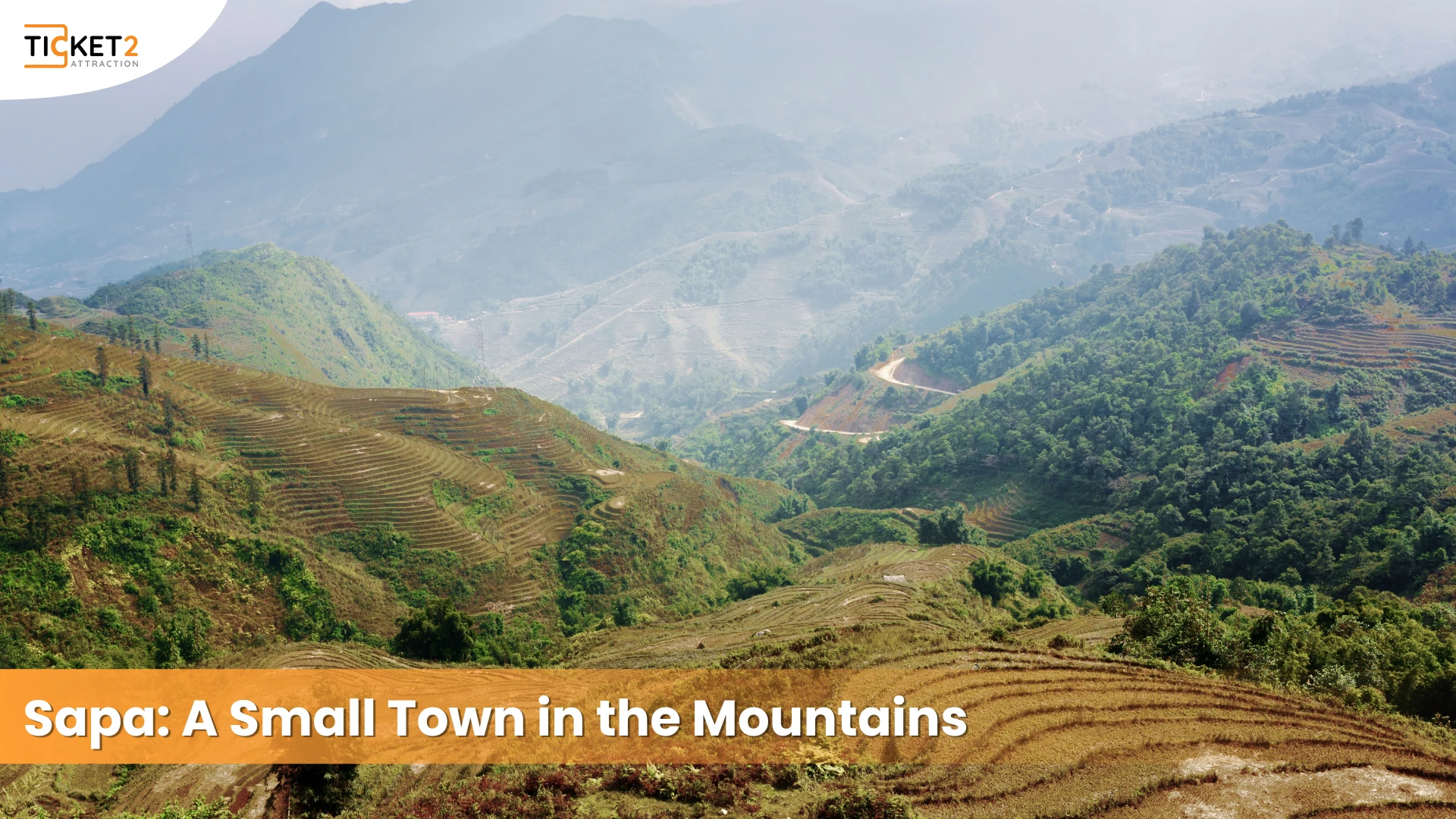
Sapa, a small town in the valley of northwestern Vietnam, features high mountains, terraced rice fields, and indigenous tribal villages scattered amidst the mist. The charm of Sapa lies not only in conquering Fansipan but also in its hiking trails, the views of the Muong Hoa Valley, and the simple way of life hidden in the mountain villages. If you are planning a trip to Sapa, check out these coordinates, activities, and interesting experiences to plan your entire trip in one place.
Sapa Travel Coordinates
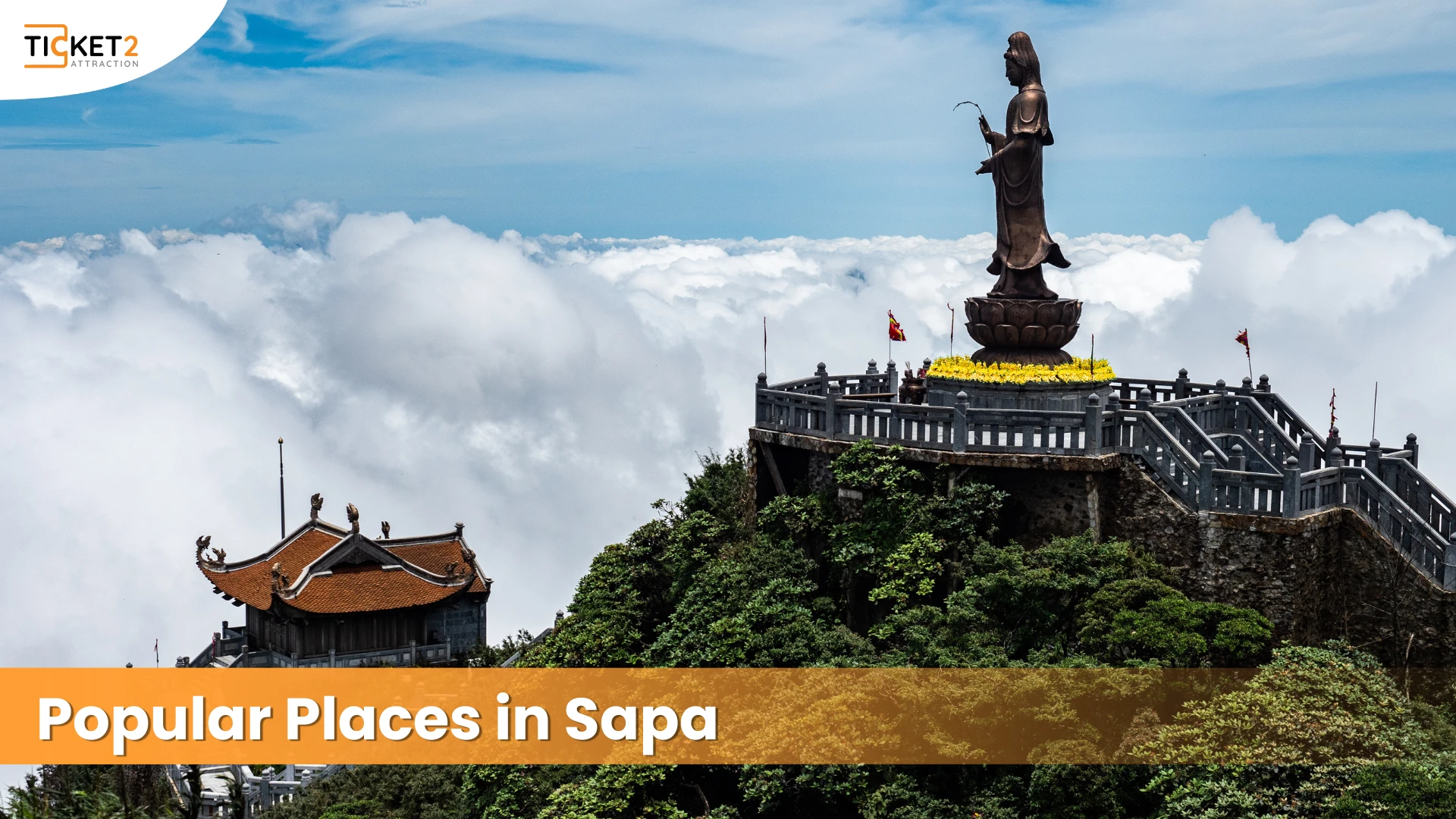
- Fansipan: The highest peak in Vietnam. Take the cable car to see the mountain views and the sea of mist from a high angle.
- Muong Hoa Valley: A large valley surrounded by mountains and terraced rice fields, perfect for sightseeing and photography.
- Cat Cat Village: An ancient Hmong village where you can experience the local way of life and see wooden houses and waterfalls in the middle of the valley.
- Ta Van Village: A village nestled in the valley and terraced fields, perfect for walking and experiencing the rural atmosphere of Sapa.
- Lao Chai Village: Another popular village for viewing terraced rice fields and mountain scenery up close.
- Silver Waterfall (Thác Bạc): A large waterfall flowing down a high cliff amidst the forest and mountains.
- Love Waterfall: A natural waterfall that requires a hike through the forest, perfect for nature lovers.
- O Quy Ho Pass: A viewpoint on a mountain route offering views of complex mountain ranges and a sea of mist on clear days.
- Sapa Stone Church: An old stone church in the heart of Sapa, an easily accessible landmark.
- Sapa Market: A local market featuring food, souvenirs, and handicrafts from mountain communities.
How to travel to Sapa
Sapa is located in northwestern Vietnam, amidst mountains and valleys, so it has no airport of its own. Most tourists from Thailand usually travel to Hanoi first and then take a vehicle up to Sapa. The route from Hanoi offers buses, trains, and private transfers to choose from based on your budget and travel style.
- Bangkok → Hanoi: Travel by direct flight from Bangkok to Noi Bai International Airport, the main airport in Hanoi. From there, you can connect to Sapa.
- Hanoi → Sapa by bus: One of the most convenient methods as it travels directly from Hanoi to Sapa without needing to change vehicles. It takes about 5–6 hours, with both seating and sleeper buses available.
- Hanoi → Lao Cai → Sapa: For those who want to try the train, you can travel from Hanoi to Lao Cai station and then take a bus, van, or taxi up to Sapa. The total travel time is longer than taking a direct bus.
- Private Transfer: You can choose to travel from Hanoi to Sapa privately, which is suitable for families or groups of friends who want flexibility in timing and pick-up/drop-off points.
As you reach the final part of the route, you will begin to see the mountain and valley atmosphere unique to Sapa, especially on the route from Lao Cai up to Sapa, which offers beautiful natural scenery all the way. For those planning their first trip to Sapa, it is recommended to allow plenty of time for travel from Hanoi so you have enough time to fully explore the town and various attractions.
The best time to visit Sapa
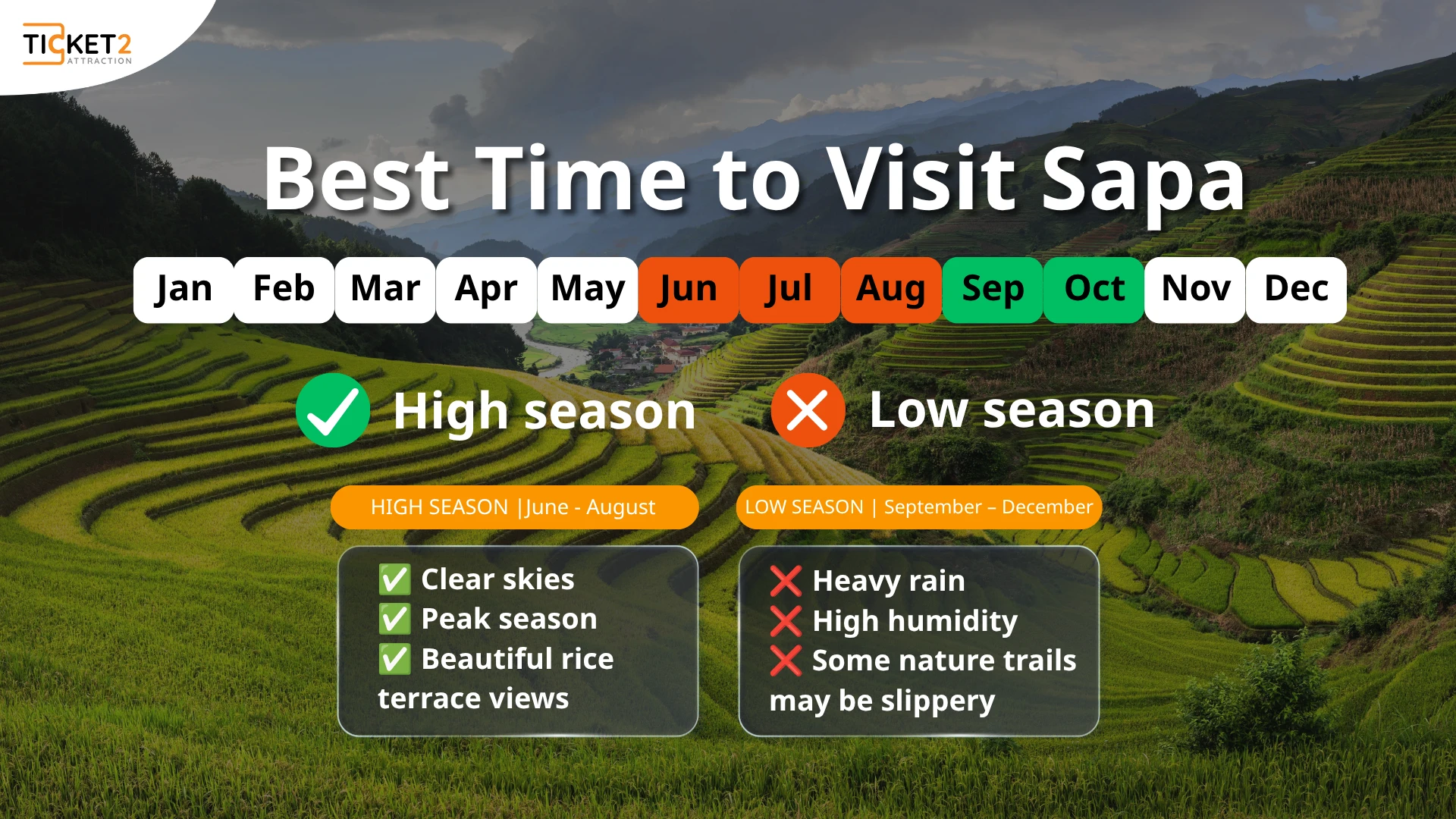
The most popular period is September–October because the weather starts to get cool and comfortable, the sky is more likely to be clear, and it is the time when the terraced rice fields turn from green to beautiful shades of gold. It is perfect for sightseeing, photography, walking in the villages, and fully experiencing the natural atmosphere of Sapa. However, there are quite a lot of tourists during this time, so you should book your accommodation and travel in advance.
June–August is the rainy season, with a chance of heavy rain, thick fog, and high humidity. Although nature is lush, some hiking trails and paths to viewpoints may be slippery. You should prepare raincoats, non-slip shoes, and check the weather forecast before traveling.For other months, you can still visit Sapa as usual, but the atmosphere will vary. For example, the beginning of the year is cold and very foggy, while the end of the year is cool, suitable for those who like a quiet atmosphere and want to avoid large crowds of tourists.
FAQs


